
UK Losing Billions in EU Trade Due to Lack of Product Deal
Written with artificial intelligence.
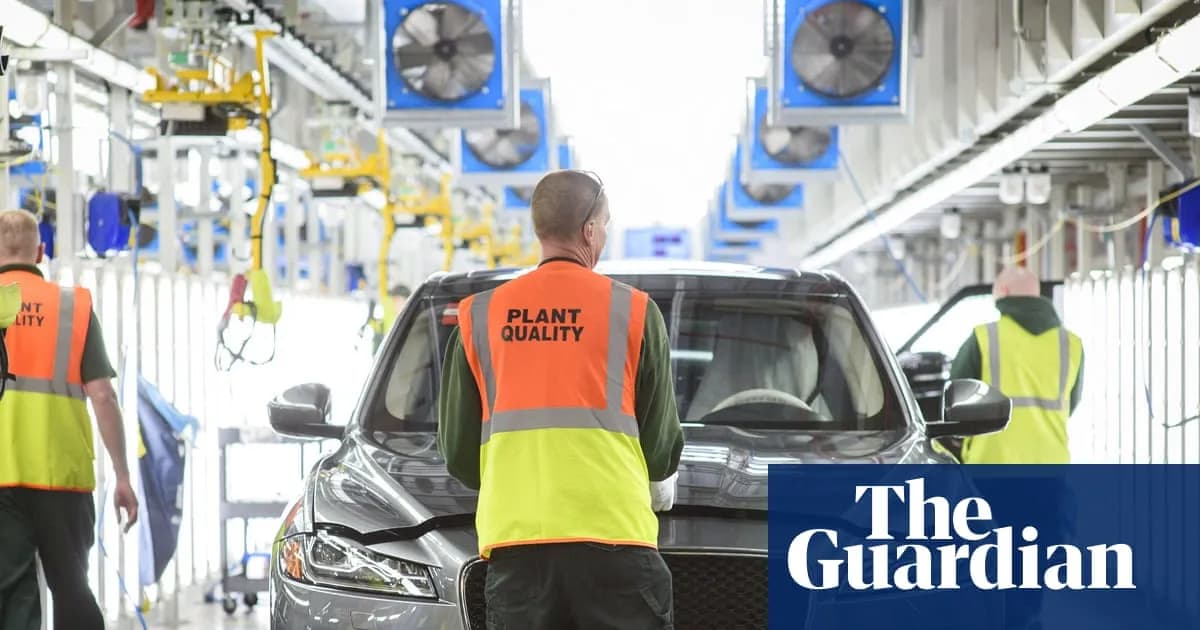
The UK could be losing up to £6.5 billion annually in EU exports due to the absence of a mutual recognition agreement on product testing. The IPPR thinktank highlights the significant impact on key industries, urging the government to revisit negotiations with the EU.
Significant Losses in Trade
The UK is reportedly losing out on as much as £6.5 billion in annual exports to the European Union because there is no deal in place that allows manufacturers to eliminate duplicate product testing. According to the Institute for Public Policy Research (IPPR), this gap has forced many companies to either stop exporting to the EU or establish subsidiaries within the EU to navigate the regulatory landscape.
Impact on Key Industries
The IPPR estimates the financial impact of not having a mutual recognition agreement (MRA) between the UK and the EU could range from £3.7 billion to £6.5 billion each year. The report underscores that the losses are particularly pronounced in three sectors:
- Motor vehicles and parts: Estimated increase of £2.48 billion to £3.42 billion in exports.
- Electronics: Potential uplift of £1.17 billion to £1.67 billion.
- Pharmaceuticals: Expected increase of £740 million to £820 million.
Call for Negotiations
The report suggests that the UK government should reopen discussions with the EU to establish an MRA based on "dynamic alignment." This would involve the UK maintaining its product rules in sync with those of the EU, allowing for mutual recognition of product assessments and thereby reducing costs for exporters.

At the recent Liberal Democrat conference, party leader Ed Davey expressed his intent to initiate talks to rejoin the EU single market and customs union. Meanwhile, the Labour party's proposals for a single market for goods were previously rejected by EU officials, who emphasized the need for adherence to fundamental principles without selective policy participation.
Conclusion
Economist Joseph Sassoon of the IPPR noted that this report is the first to isolate the trade loss attributed specifically to the absence of an MRA, ruling out other potential factors like COVID-19 disruptions or global supply chain changes. The findings highlight a critical opportunity for the UK to reduce trade friction with the EU, emphasizing the need for renewed negotiations.
This article is for information only and is not investment advice.