
Bank of England’s Hesitant Rate Increase May Extend Higher Interest Rates
Written with artificial intelligence.
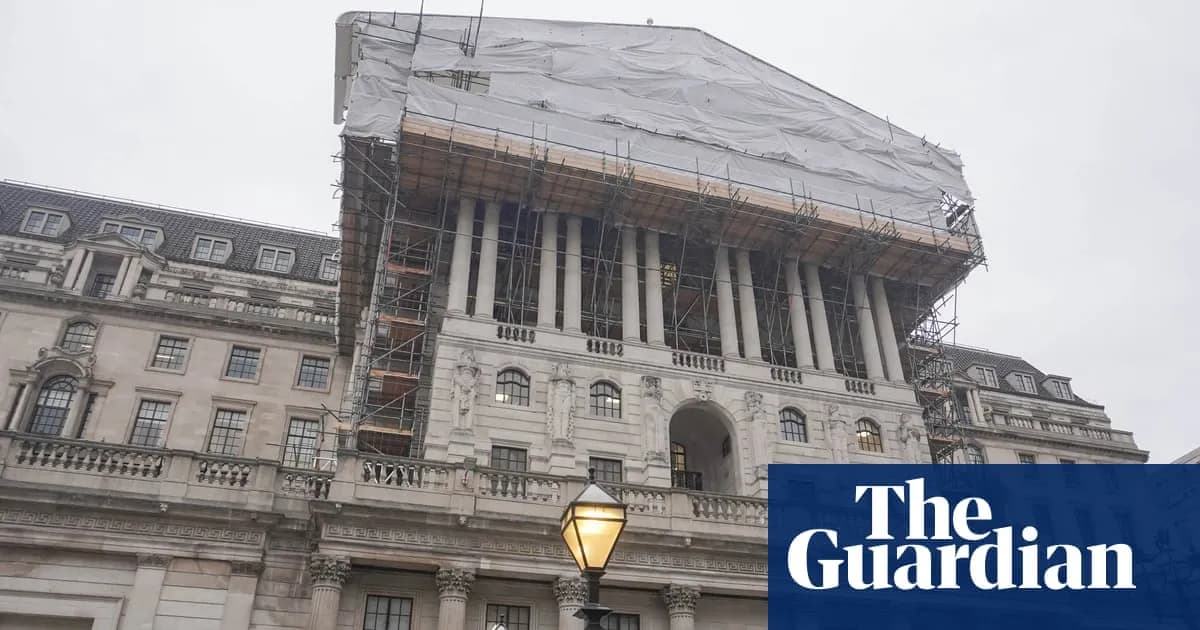
The National Institute of Economic and Social Research (Niesr) warns that the Bank of England's recent modest interest rate hike could lead to prolonged inflation above its 2% target until at least 2030. Analysts urge a more aggressive approach to prevent inflation from becoming embedded in the economy.
Critique of the Bank of England's Approach
The National Institute of Economic and Social Research (Niesr) has sharply criticized the Bank of England for its cautious response to rising inflation. Following a recent increase in interest rates from 3.75% to 4%, Niesr argues that this timid measure may result in inflation remaining above the Bank's target of 2% through at least 2030.
Niesr's director, David Aikman, emphasized the need for a more assertive stance from the Bank, warning that the current economic environment is conducive to workers demanding pay increases linked to inflation. With inflation projected to exceed 4% in the upcoming year, the risk of it becoming a persistent issue is growing. Aikman stated, "One further quarter-point rise is unlikely to be enough, and the longer the Monetary Policy Committee (MPC) waits, the more it will eventually need to do."
Current Inflation Drivers
As of now, UK inflation stands at 3.5%, significantly above the Bank’s target. This increase is largely attributed to soaring fuel costs, exacerbated by the ongoing conflict in Iran, which has pushed Brent crude oil prices consistently above $100 per barrel. Although prices dipped below $90 recently, experts remain cautious about future trends.
Economic Growth Forecasts
Niesr predicts that the UK economy will grow by 1.6% this year, but growth is expected to slow to 0.9% by 2028 due to the compounded effects of high inflation, elevated interest rates, and stringent government spending. Concerns are also raised regarding the UK government’s financial decisions, with a potential £30 billion deficit looming if spending patterns continue without adequate adjustments.
Aikman warned that financial markets could react negatively if the government fails to manage its spending effectively, especially in defense, without making cuts elsewhere. He described the current situation as a "double whammy" of increasing energy prices and rising global borrowing costs, highlighting the importance of decisive action in monetary and fiscal policy.