
Bank of England Raises Interest Rate for First Time Since 2023
Written with artificial intelligence.
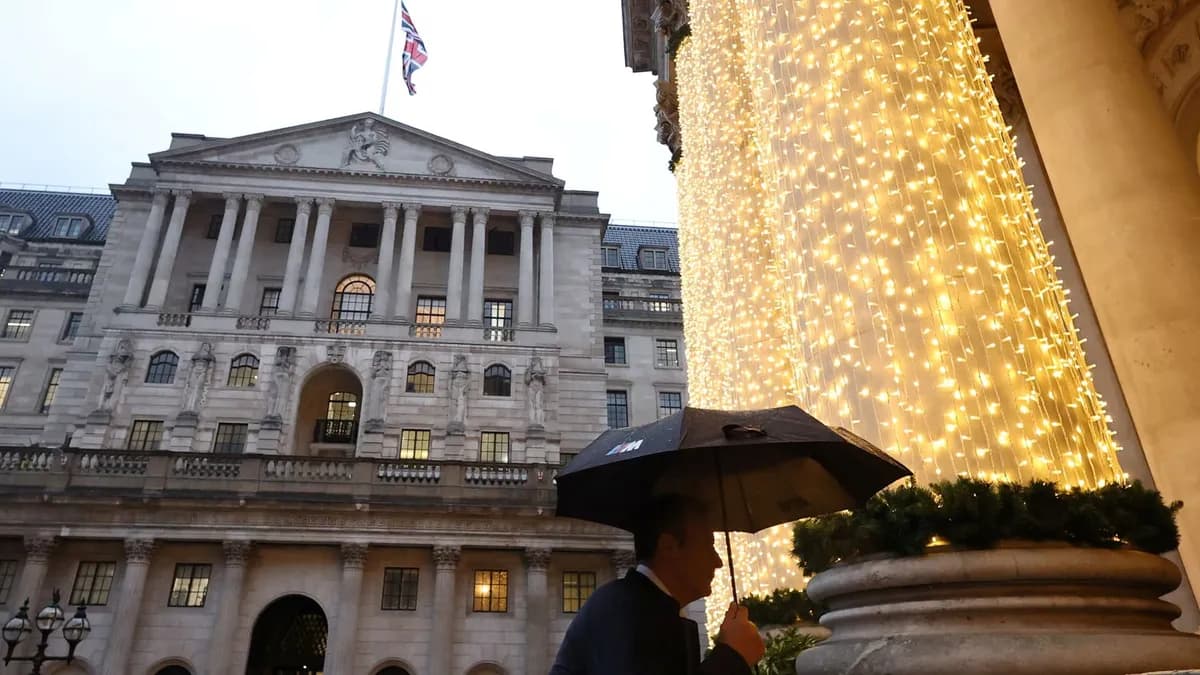
The Bank of England has increased its key interest rate by 25 basis points to 4%, marking its first hike in over three years. This decision comes amid rising inflation expectations, with predictions of inflation nearing 5% by mid-2027.
Rate Hike Details
On Thursday, the Bank of England announced a 25 basis point increase in its key interest rate, bringing it to 4%. This marks the first rate hike since August 2023, making the Bank the last major central bank to begin tightening its monetary policy following the ongoing conflict in the Middle East.
The decision was supported by the majority of the Monetary Policy Committee, voting 8 to 1 in favor of the hike. The dissenting member called for a more significant increase of 50 basis points to 4.25%. The committee noted that global energy prices have risen during the ongoing conflict, influencing their decision.
Inflation Forecast
Policymakers have indicated that U.K. inflation is expected to climb to approximately 5% by mid-2027, after which it is anticipated to decline as the pressures from rising energy prices ease. Bank of England Governor Andrew Bailey highlighted the risks associated with the ongoing conflict, warning that without a resolution, inflation could continue to rise.
Data from earlier this month showed that the U.K.'s annual inflation rate increased to 3.5% in September, primarily driven by higher fuel costs. As a net energy importer, the U.K. remains sensitive to fluctuations in global energy markets.
Market Reactions
Following the announcement, yields on U.K. government bonds, known as gilts, increased, with the benchmark 10-year gilt yield rising to 5.1546%. The British pound remained stable against the U.S. dollar and the euro. Investment strategist Scott Gardner from JPMorgan noted that the decision to raise rates is a significant shift from earlier expectations that rates would decrease as inflation was under control.
The outlook remains uncertain, with natural gas prices also affecting inflation dynamics. The Bank of England is likely to proceed cautiously with future rate increases to avoid hindering recent economic growth.
This article is for information only and is not investment advice.