
UK Inflation Rises to 3.6% Amid Record Fuel Prices Driven by Middle East Conflict
Written with artificial intelligence.
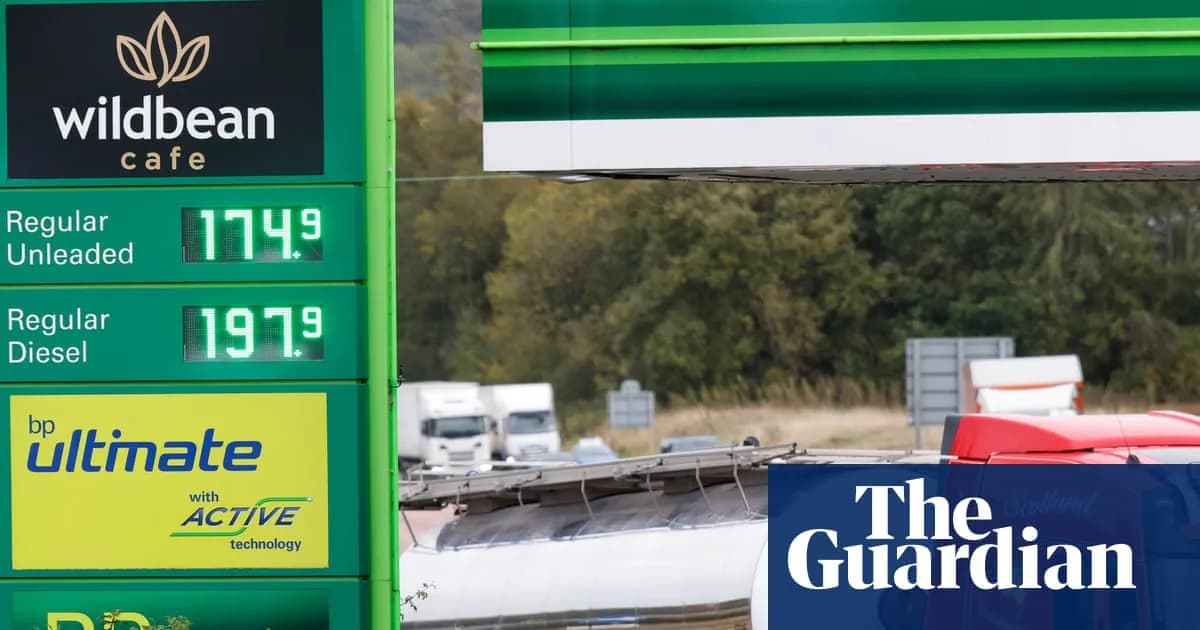
UK inflation increased to 3.6% in October, largely due to soaring petrol and diesel prices linked to the ongoing war in the Middle East. This rise adds financial strain on households as energy bills are also projected to surge significantly in January.
Rising Inflation and Fuel Prices
In October, inflation in the UK reached 3.6%, up from 3.5% in September, as reported by the Office for National Statistics (ONS). This increase is primarily attributed to a significant rise in petrol and diesel prices, which are reaching record highs in the wake of the ongoing conflict in the Middle East.
Petrol prices rose by 5.2 pence per litre to an average of 174.7 pence, the highest level seen in four years. Diesel prices also surged, climbing by 7 pence to 199.5 pence per litre, marking the highest price since records began in 1996. Fuel costs alone increased at an annual rate of 33.2%, the largest since July 2022, following geopolitical tensions that have disrupted global energy markets.
Impact on Energy Costs
Alongside rising fuel prices, households are facing an anticipated 26% increase in energy bills starting January, which will average £2,166 per year for a typical household. This forecast includes a recent 4% hike in the Ofgem energy price cap that took effect at the beginning of October.
In response to the economic pressure, the UK government plans to provide a £100 winter handout to 20 million households starting in January as part of a broader effort to mitigate the impact of rising costs.

Future Economic Outlook
The Bank of England has already raised interest rates from 3.75% to 4% as it addresses inflationary pressures. Governor Andrew Bailey indicated that further rate hikes may be necessary if energy prices continue to escalate due to the conflict. Financial markets expect at least two further quarter-point increases before the end of next year.
Core inflation, which excludes volatile categories like energy and food, remained stable at 2.8%, while services inflation was steady at 3.7%. Despite the current inflation levels, food prices increased at a slower rate of 0.9%, down from 1.3% in September.
Emma Reynolds, Chief Secretary to the Treasury, emphasized that the ongoing conflicts have significantly impacted costs globally, and the government’s measures aim to provide immediate relief and long-term solutions to stabilize energy costs.