
Korean Treasury Yields Rise Ahead of U.S. FOMC Decision
Written with artificial intelligence.
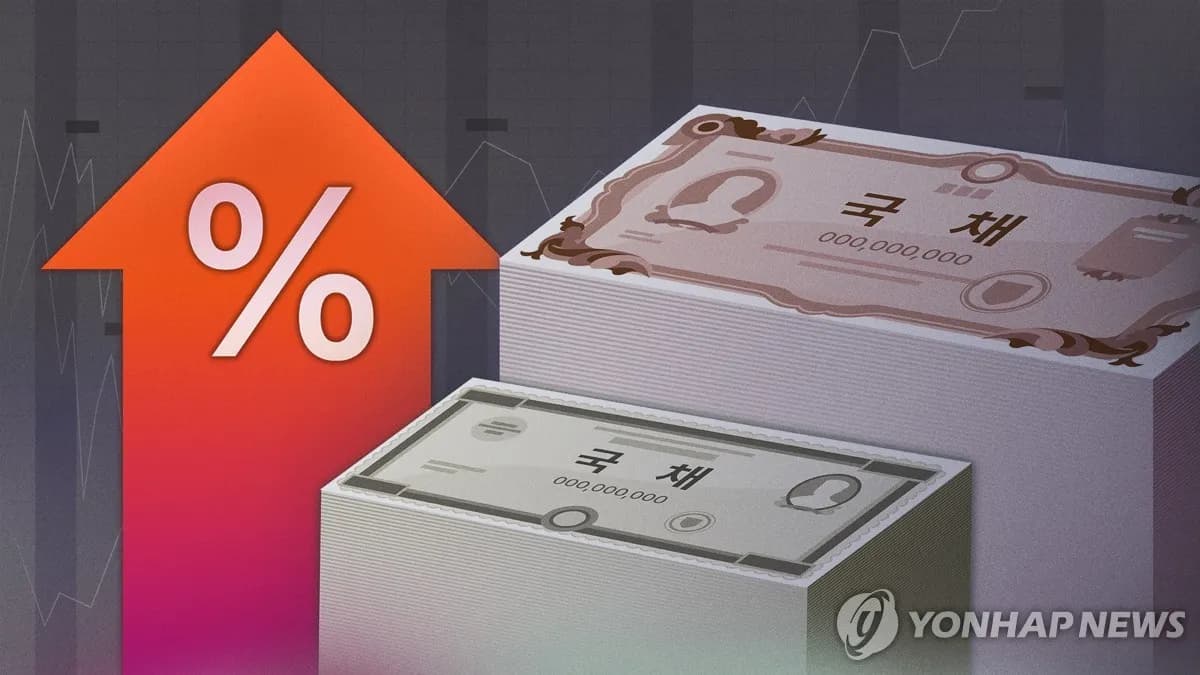
On October 28, South Korea's treasury bond yields increased across all maturities a day before the U.S. Federal Open Market Committee (FOMC) is set to announce its interest rate decision. The three-year yield closed at 3.799%, up 4.1 basis points from the previous day.
Overview of Yield Changes
On October 28, the yields on South Korean government bonds rose in anticipation of the U.S. Federal Open Market Committee (FOMC) interest rate decision scheduled for the following day. The three-year treasury yield closed at 3.799%, reflecting an increase of 4.1 basis points (1 basis point equals 0.01%).
Specific Yield Movements
- Three-year yield: 3.799% (+4.1 bp)
- Five-year yield: 3.949% (+5.0 bp)
- Ten-year yield: 4.108% (+7.6 bp)
- Twenty-year yield: 4.193% (+4.8 bp)
- Thirty-year yield: 4.221% (+7.0 bp)
- Fifty-year yield: 4.251% (+5.3 bp)
- Two-year yield: 3.763% (+4.7 bp)
The rise in yields indicates a decline in bond prices, which is typically associated with increased investor risk appetite, as evidenced by a notable rise in the KOSPI, South Korea's stock index, which surged by 6.63% to close at 6,012.44.
Market Sentiment and Expectations
Market participants are largely expecting the FOMC to maintain the current interest rate, with a 90.6% probability reflected in the Chicago Mercantile Exchange’s FedWatch Tool. Analysts suggest that the recent recovery in risk assets, such as the KOSPI, has countered previous declines in yields. They also indicate that foreign investors have sold treasury futures, adding downward pressure on bond prices.
The focus remains on how the U.S. Federal Reserve will address concerns regarding inflation and the pace of potential rate hikes, given that inflationary pressures persist. Analysts believe there may be hawkish comments regarding future monetary policy adjustments due to ongoing high inflation levels.
This article is for information only and is not investment advice.