
Global Economic Challenges Highlighted at IMF and World Bank Meetings in Bangkok
Written with artificial intelligence.

World economic leaders are convening in Bangkok this week amid escalating Middle Eastern conflicts and rising public debt, which pose risks to already sluggish global growth. The discussions will focus on the inflationary impacts of the Iran conflict and recent energy supply shocks.
Overview of the Meetings
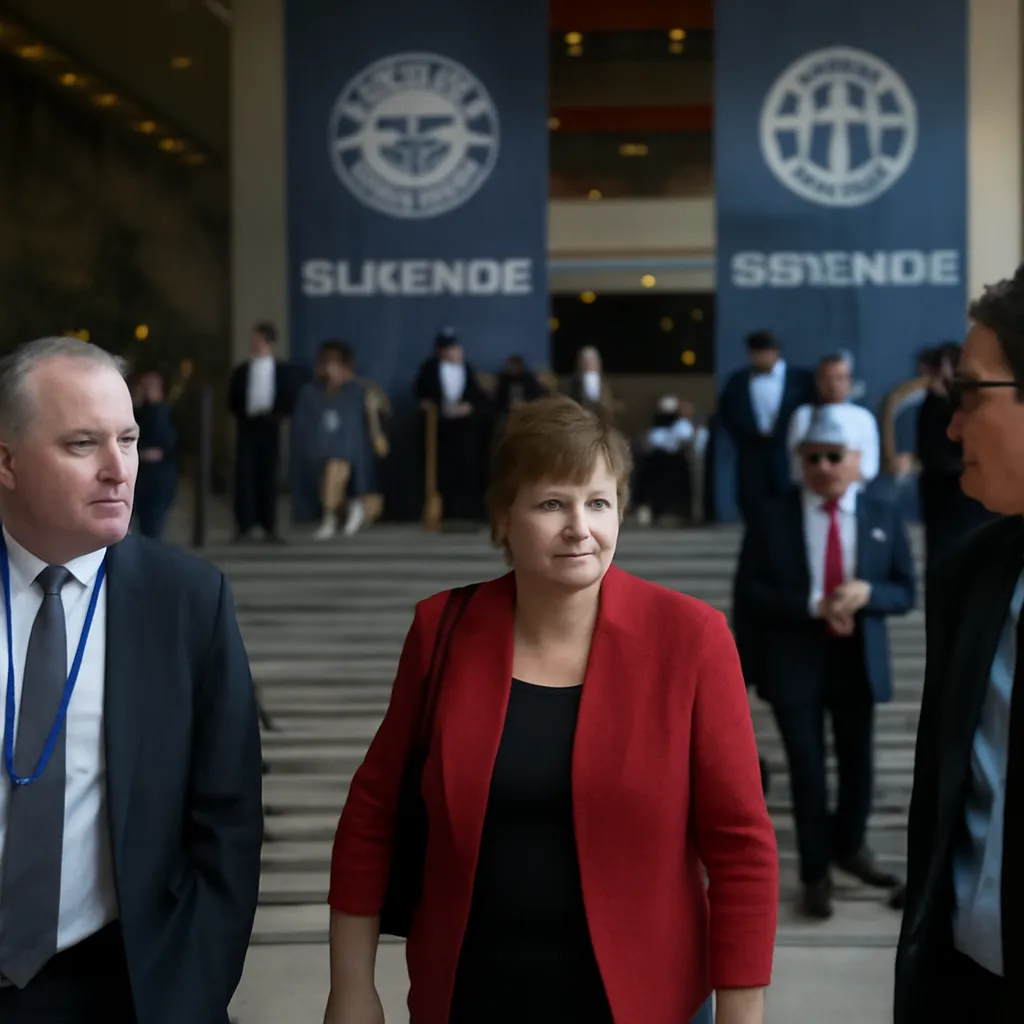
This week, global economic authorities are gathering in Bangkok for the annual meetings of the International Monetary Fund (IMF) and the World Bank, the first held outside of Washington in three years. The backdrop includes an ongoing war in the Middle East, unprecedented energy supply shocks, and increasing interest rates, all contributing to significant risks for global economic growth.
Key Topics
The meetings will center on the conflict involving Iran, which has been ongoing for eight months and is expected to dominate discussions due to its inflationary impact. Kristalina Georgieva, IMF Managing Director, noted that approximately 18,000 participants are registered, marking an increase of 4,000 from the last off-site meeting in Morocco.
Attendance and Absences
Notably absent from the meetings will be U.S. Treasury Secretary Scott Bessent, who has sent two senior officials in his place due to other commitments. The President of the Federal Reserve, Kevin Warsh, is expected to attend and will participate in a public event with Georgieva on October 16. Other finance ministers are also missing due to internal obligations.
Growing Concerns
Ajay Banga, President of the World Bank, mentioned that despite better-than-expected global growth since the closure of the Strait of Hormuz—a critical route for about 20% of the world's oil supply—new pressures are emerging. Rising diesel prices, increased fertilizer costs, and the looming threat of a "super" El Niño event, which could lead to significant heat-related fatalities, are all factors of concern.
Security Issues
Furthermore, the security of air travel routes to Bangkok, which often traverse the Middle East, presents immediate challenges for international travelers following recent attacks on Saudi airports. The connection between national security and international finance has become increasingly apparent, with experts emphasizing the need for policymakers to adapt swiftly to geopolitical crises in our interconnected world.
Debt as a Challenge
Another pressing issue is the rising public debt, which the IMF reports is at its highest level since World War II and is projected to exceed 100% of GDP before 2030. Advanced economies, particularly the United States, have the highest debt-to-GDP ratios, while emerging markets and low-income countries face vulnerabilities due to a combination of capital flight, the El Niño phenomenon, and insufficient investment in artificial intelligence, which could mitigate supply shocks.