
Former BOJ Chief Warns of Rising Interest Rates and Inflation Risks
Written with artificial intelligence.
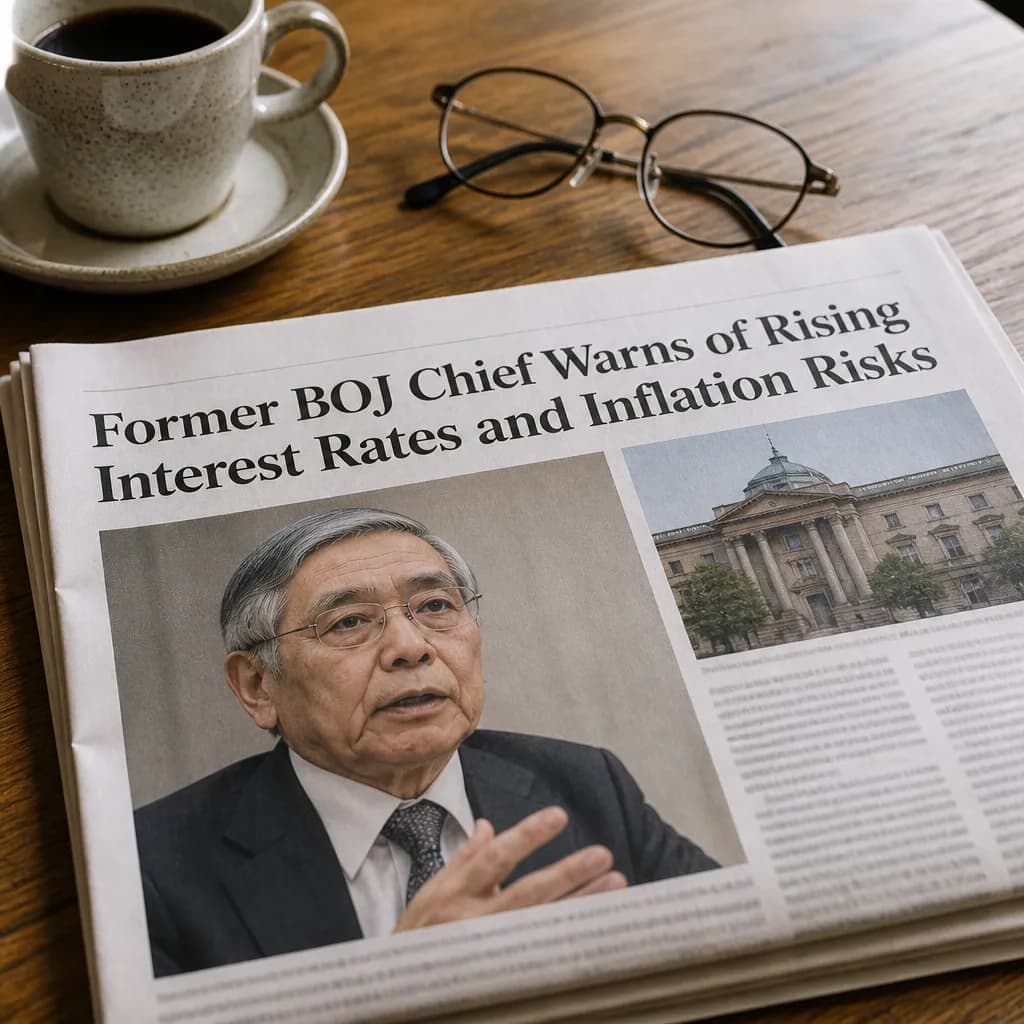
Haruhiko Kuroda, the former governor of the Bank of Japan (BOJ), cautioned that sustained inflation pressures could lead to accelerated interest rate hikes, potentially surpassing neutral levels. He also raised concerns about the government's proposed tax cuts, suggesting they may exacerbate inflation instead of stimulating economic growth.
Kuroda's Warning on Interest Rates
In a recent Bloomberg interview, Haruhiko Kuroda, the former governor of the Bank of Japan, highlighted the potential for the BOJ to increase interest rates more rapidly if inflation persists. He stated that if inflation worsens, the policy rate could exceed the neutral level, which is the rate that neither stimulates nor restrains economic growth. This warning comes as the market anticipates an additional rate hike from the BOJ in December.
Kuroda emphasized that the direction of interest rates is entirely dependent on inflation trends. He noted, "Everything is dependent on inflation. If inflation becomes more serious, interest rates will naturally have to accelerate, and there is a possibility that rates will exceed neutral levels." This statement marks one of his clearest public warnings regarding monetary policy since leaving office in April 2023.
Current BOJ Policy and Economic Context
Currently, the BOJ's policy rate stands at 1.25%, with expectations for a 0.25% increase in December. Economists predict that the terminal rate for this tightening cycle could reach a median estimate of 1.75%, with some anticipating it could go as high as 2.5%. The BOJ estimates Japan's nominal neutral rate to be between 1.1% and 2.5%, but the actual level remains uncertain.
Kuroda also expressed skepticism about the Japanese government's proposed tax cuts, which aim to reduce the consumption tax on food for two years starting in April 2027. He argued that stimulating consumer demand in an economy nearing full employment may not significantly boost growth, but could instead lead to higher prices. He remarked, "There is no point in this. In such a situation, tax cuts will clearly not increase growth rates and will only push up prices."
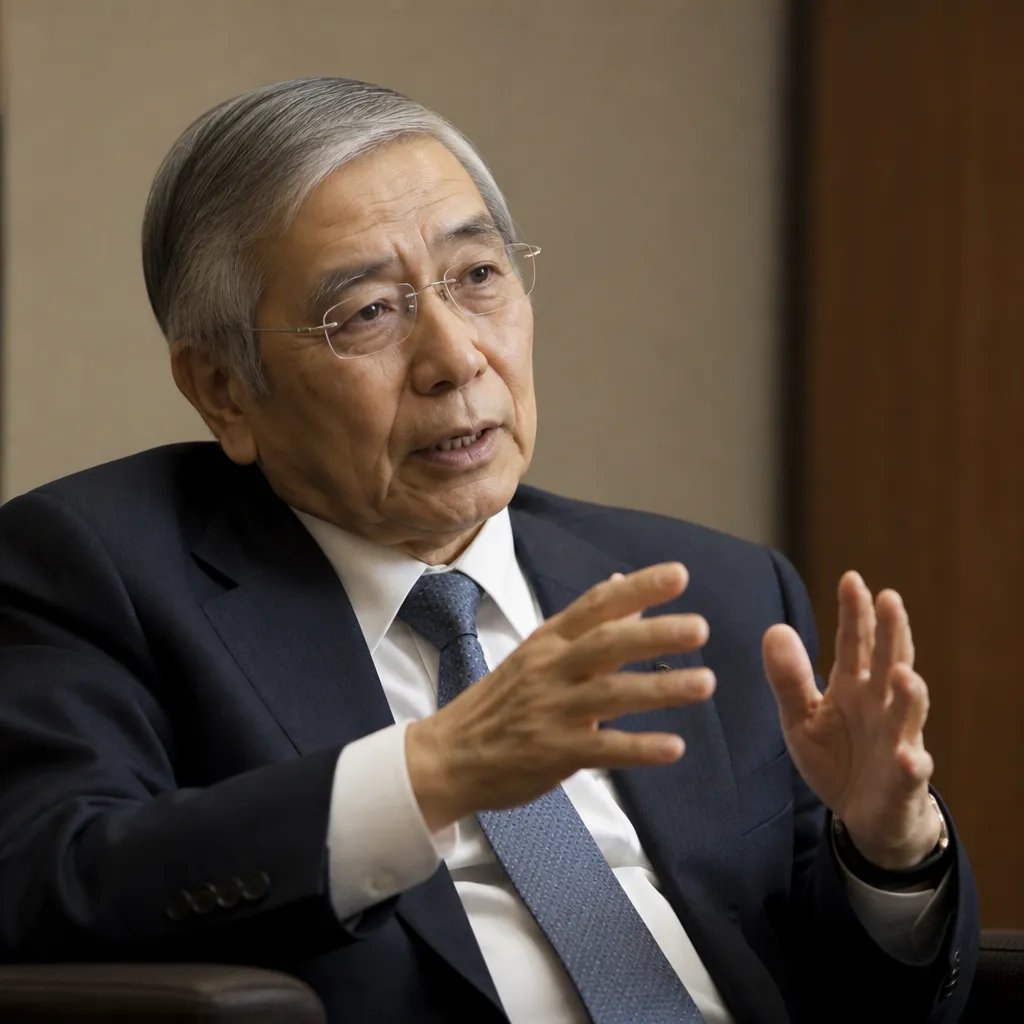
Economic Growth and Future Outlook
Recent economic data revealed a contraction in Japan's GDP by 0.1% in the third quarter, marking negative growth for the first time in four quarters. While consumer spending decreased by 0.3%, investments in AI and automation showed a 1.6% increase, indicating some support for the economy. Kuroda believes this negative growth may be temporary and should not be seen as a clear worsening trend.
As Japan navigates these challenges, the BOJ must evaluate the complex impacts of inflation, government fiscal policies, and economic growth on price stability. Continued import inflation and rising domestic demand could lead to interest rates exceeding current market expectations. Conversely, sustained consumer weakness may constrain the pace of rate hikes. Investors should closely monitor the BOJ's December meeting for indications on interest rate decisions and guidance from current BOJ Governor Kazuo Ueda regarding future rate levels.
This article is for information only and is not investment advice.