
European Central Bank Raises Rates Amid Energy Inflation Risks
Written with artificial intelligence.
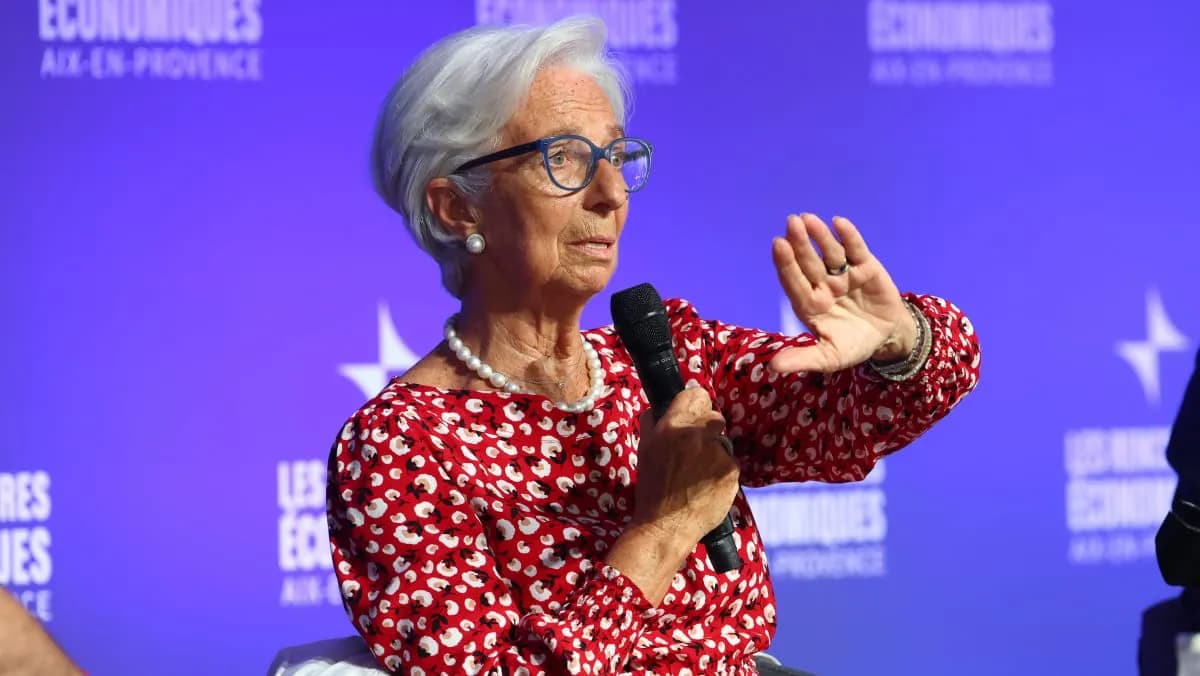
The European Central Bank (ECB) has increased its deposit rate to 2.5%, the highest since March 2025, in response to rising energy prices driven by geopolitical tensions. This marks the second rate hike of the year, with potential for further adjustments as inflation remains uncertain.
ECB's Rate Increase
On Thursday, the European Central Bank (ECB) announced a quarter-point increase in its main deposit rate, bringing it to 2.5%. This decision follows a policy meeting held in Berlin and aims to address inflation concerns stemming from rising energy prices linked to ongoing conflicts in the Middle East. The ECB warned that economic outlook remains uncertain, with inflation risks skewed upward and growth risks tilted downward.
Inflation Concerns
In August, inflation in the eurozone reached 3.3%, the highest level in three years and significantly above the ECB's target of 2%. The underlying inflation rate, which excludes volatile items like energy and food, slightly decreased to 2.4%. The ECB is particularly concerned that the current energy shock could lead to broader economic repercussions, including wage demands from workers and increased costs passed on to consumers by businesses.
Economic Projections
Despite geopolitical tensions, the ECB maintained its inflation forecast at 3% for 2026 and adjusted its 2027 projection to 2.5% from 2.3%. The growth forecast for this year has been revised slightly upward to 0.9%, supported by stronger-than-expected performance from Germany, the eurozone's largest economy. The ECB indicated it still has room to maneuver, suggesting that further rate hikes could be forthcoming even if energy prices stabilize.

Political Reactions
The ECB's decision has drawn criticism, particularly from French leftist leader Jean-Luc Mélenchon, who argued that the monetary tightening occurs while France is on the brink of recession. He called the ECB's actions reckless, emphasizing the need for a more accommodating monetary policy. ECB President Christine Lagarde is expected to address these criticisms in a forthcoming press conference, reaffirming the bank's independence from national political debates.
This article is for information only and is not investment advice.