
ECB Raises Interest Rates to 2.5% Amid Rising Inflation
Written with artificial intelligence.
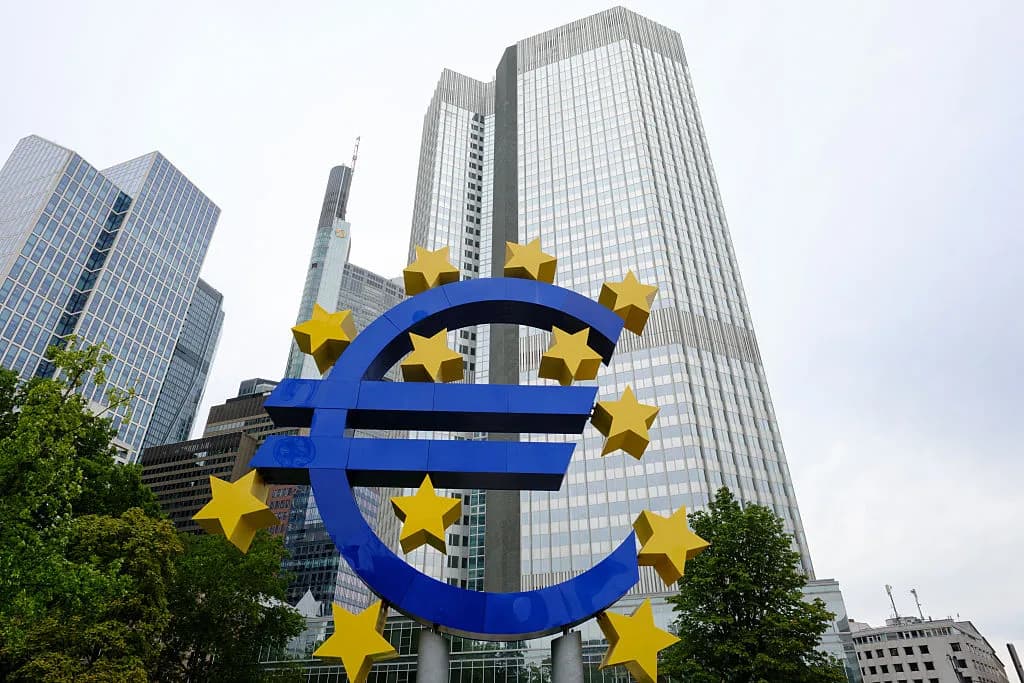
The European Central Bank (ECB) has increased its key interest rate to 2.5% following a rise in inflation in the Eurozone to 3.3% in August. This decision aims to combat price surges exacerbated by geopolitical tensions, particularly the conflict involving Iran.
ECB's Rate Increase
On Thursday, the European Central Bank (ECB) raised its main interest rate to 2.5%. This move comes as inflation in the Eurozone, which includes 21 countries, surged to 3.3% in August, up from 2.9% in July, marking the highest level in three years and significantly above the ECB's target of 2%.
The ECB stated that ongoing tensions from the conflict in the Middle East continue to drive inflation higher, suggesting it will remain above the target for an extended period. ECB President Christine Lagarde described the decision to raise rates as an "obvious choice" and noted that it was unanimously approved by the Governing Council. However, she refrained from providing forward guidance on future rate changes, citing high geopolitical uncertainty.
Context of the Decision
The current geopolitical landscape, particularly the war involving the U.S. and Israel against Iran and the subsequent closure of the Strait of Hormuz, a vital energy passage, has contributed to global inflationary pressures. Since the outbreak of the conflict in late February, inflation has consistently exceeded the ECB's 2% target. Core inflation, which excludes volatile food and energy prices, has remained steady at 2.4% as of August.
In response to rising inflation fears, global bond yields have increased in recent weeks, with the yield on the German 10-year bond hitting 3.44% on Thursday, the highest since 2011. The ECB also raised its inflation forecast for 2027 from 2.3% to 2.5%, while keeping its 2026 forecast steady at 3%. Growth predictions for this year were adjusted up from 0.8% to 0.9% and for next year from 1.2% to 1.4%, reflecting stronger-than-expected resilience in the Eurozone economy.

Market Reaction
Following the announcement, the euro weakened slightly against the U.S. dollar, falling from $1.1616 to $1.614. Additionally, yields on two-year German bonds, sensitive to interest rate changes, rose from 3.06% to 3.07%. Prior to the ECB's decision, markets had anticipated a total increase of 75 basis points by June 2027.
Mark Wall, Chief Economist for Europe at Deutsche Bank, commented on the situation, indicating that while inflation risks could lead to another rate hike in December, the ECB must proceed cautiously. He warned that rising gas prices could eventually hinder economic growth, raising questions about the extent and timing of that impact.
This article is for information only and is not investment advice.