
Brazil's Central Bank Director Sees Stability in Real Amid U.S. Rate Hike
Written with artificial intelligence.
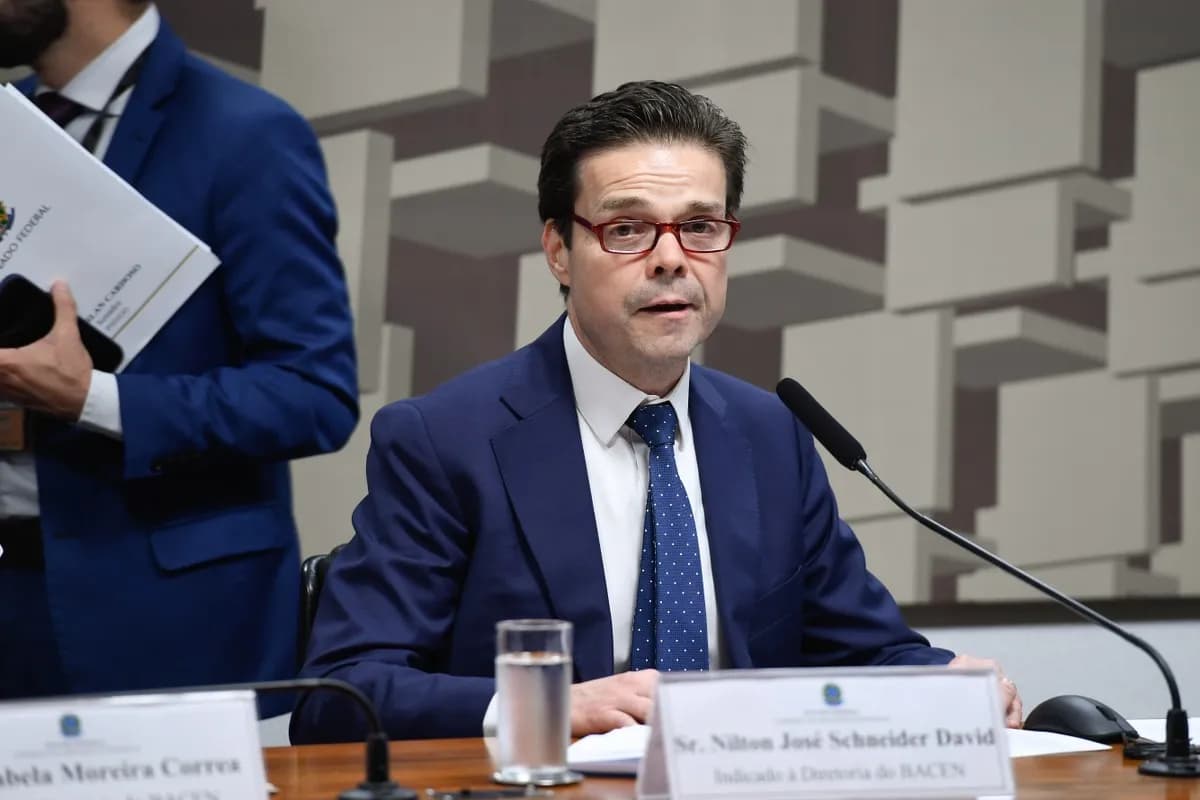
Nilton David, the director of monetary policy at Brazil's Central Bank, expressed confidence that the Brazilian real will remain stable despite recent U.S. interest rate hikes. Speaking at the J. Safra Investment Conference, he noted that the current stage of Brazil's monetary policy mitigates potential volatility.
Stability in the Face of U.S. Interest Rate Increases
Nilton David, the director of monetary policy at Brazil's Central Bank, shared his insights during the J. Safra Investment Conference held in São Paulo on September 23, 2026. He commented on the implications of increasing interest rates in the United States for Brazil, stating that he does not expect significant fluctuations in the Brazilian real due to the current state of Brazil's monetary policy.
Recently, the Brazilian Monetary Policy Committee (Copom) lowered the benchmark interest rate from 14% to 13.75%. In contrast, on the same day, the U.S. Federal Reserve raised its benchmark interest rate by 0.25 percentage points to a range of 3.75% to 4.0% annually. David explained that the U.S. tends to attract capital when it increases interest rates, given its stability in inflation and productivity.
David emphasized that the current level of interest rates in the U.S. is quite different from what has been seen over the past 15 to 20 years. He referred to the atypical conditions from 2008 until the COVID-19 pandemic in 2020, which included a significant financial crisis that led to negative real interest rates in the U.S. for a decade.

During the conference, David also mentioned that the Central Bank is studying measures aimed at improving credit supply. These measures focus on transparency, risk mapping, and aligning incentives to reduce systemic risks. He clarified that these initiatives are macroprudential and distinct from monetary policy, with the goal of enhancing the sustainability of credit offerings and addressing household indebtedness.
In summary, David's remarks reflect a cautious optimism regarding the Brazilian economy's resilience in the face of external financial pressures, while also highlighting the importance of careful credit management and systemic risk mitigation.